Overview
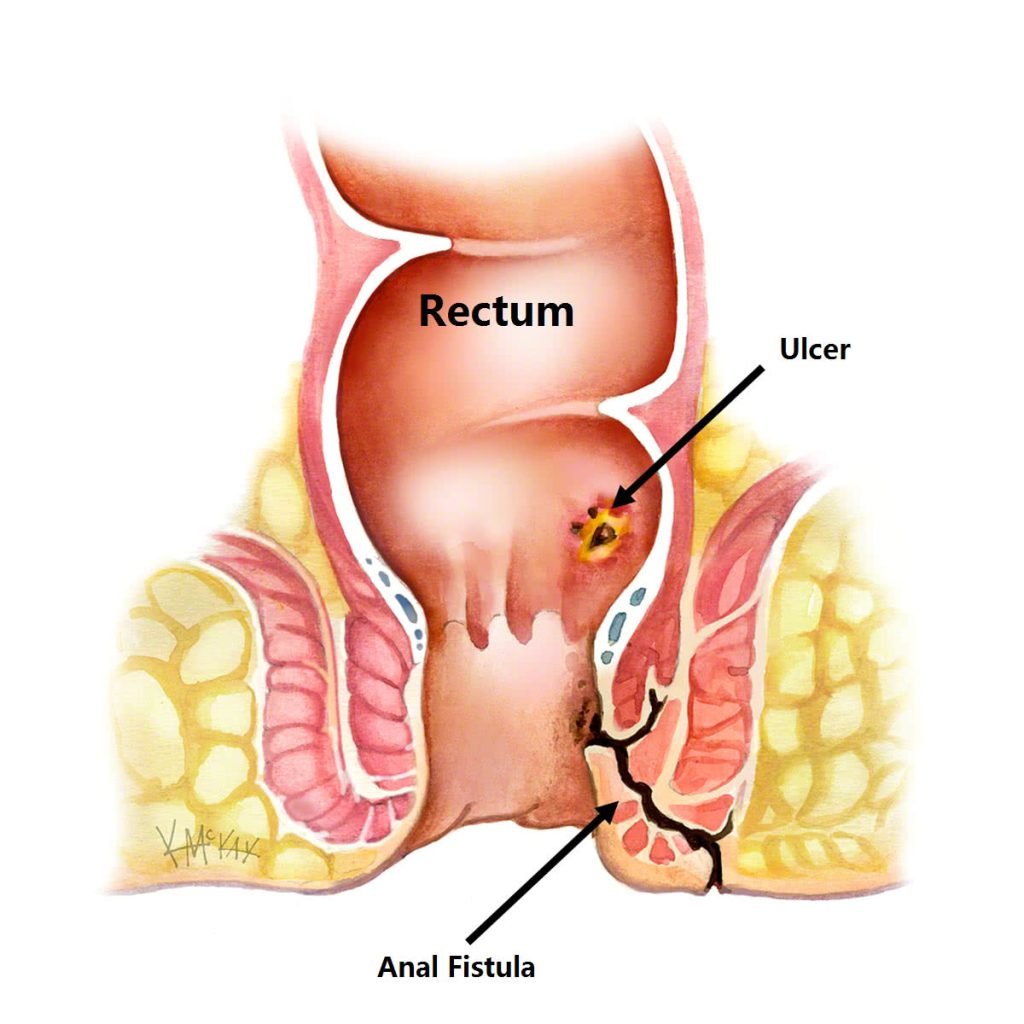
An anal fistula, also known as fistula-in-ano, is a passage that forms between the interior of the anus and the surrounding skin. The anus serves as the muscular outlet at the conclusion of the digestive tract, facilitating the elimination of stool from the body.
Typically, anal fistulas arise from an infection originating in an anal gland. This infection prompts the formation of an abscess, which may either naturally drain or necessitate surgical drainage through the skin adjacent to the anus. Subsequently, this drainage pathway persists, linking the infected anal gland or anal canal to an opening in the external skin encircling the anus.
Treatment for an anal fistula often requires surgical intervention, although nonsurgical approaches may be considered in certain cases.
Symptoms
Symptoms of an anal fistula can include:
- Pain: Persistent pain, especially during bowel movements, is a common symptom of an anal fistula. The pain may worsen when sitting or during certain movements.
- Discharge: There may be persistent drainage of pus, blood, or foul-smelling fluid from the opening of the fistula. This discharge may soil underwear and cause irritation of the surrounding skin.
- Swelling: Swelling around the anus or in the surrounding tissue may occur, particularly if there is an abscess associated with the fistula.
- Itching: Some individuals may experience itching or irritation around the anus due to the presence of the fistula or its associated discharge.
- Redness and inflammation: The skin around the anus may appear red, inflamed, or irritated due to the presence of the fistula and its associated symptoms.
Causes
The majority of anal fistulas stem from an infection originating in an anal gland, which leads to the formation of an abscess. This abscess either self-drains or requires surgical drainage adjacent to the anus. Subsequently, a fistula, a tunnel beneath the skin, develops along this drainage path, connecting the affected anal gland or anal canal to an opening in the external skin surrounding the anus.
The anal sphincter muscles, arranged in rings at the anus’s opening, enable stool control. Fistulas are categorized based on their interaction with these sphincter muscles. This categorization aids surgeons in determining appropriate treatment approaches.
Risk Factors
Risk factors for an anal fistula include:
- Previously drained anal abscess
- Crohn’s disease or other inflammatory bowel disease
- Trauma to the anal area
- Infections of the anal area
- Surgery or radiation for treatment of anal cancer