What is a hernia?
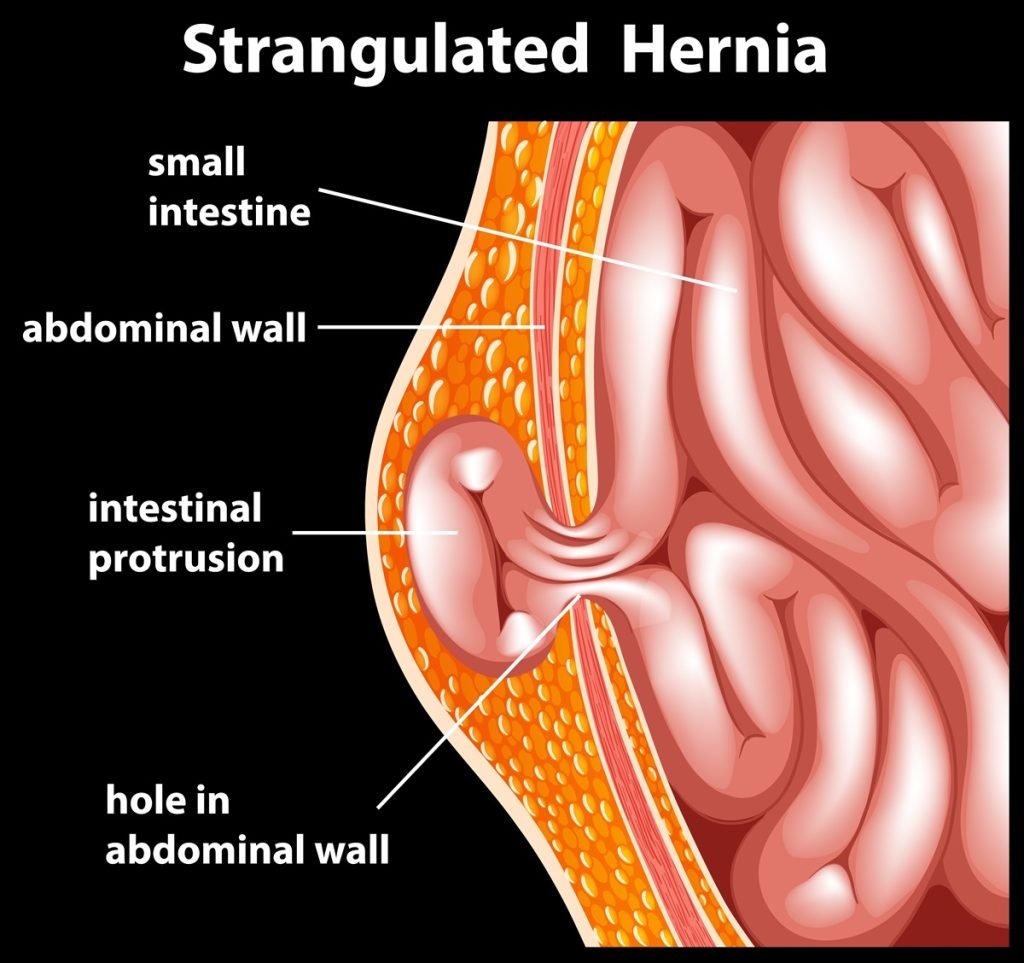
A hernia develops when an organ protrudes through a weak spot in the surrounding muscle or tissue. For instance, the intestines may protrude through a weakened area in the abdominal wall.
While many hernias manifest in the abdomen, spanning from the chest to the hips, they can also emerge in the upper thigh and groin regions.
While most hernias aren’t immediately life-threatening, they do not resolve spontaneously. In some cases, surgery may be necessary to avert potentially hazardous complications.
Types of hernia
There are several types of hernias, including:
- Inguinal Hernia: This is the most common type of hernia and occurs when a part of the intestine or abdominal tissue protrudes through the inguinal canal in the groin area.
- Femoral Hernia: Less common than inguinal hernias, femoral hernias develop when tissue protrudes through the passage that carries the femoral artery into the upper thigh.
- Umbilical Hernia: This type of hernia occurs when tissue protrudes through the abdominal wall near the navel, often due to a weakness in the abdominal muscles.
- Incisional Hernia: These hernias develop at the site of a previous surgical incision where the abdominal muscles have weakened or separated, allowing tissue to protrude.
- Hiatal Hernia: Unlike the others, a hiatal hernia occurs when a portion of the stomach protrudes through the diaphragm into the chest cavity, often causing symptoms like acid reflux and heartburn.
Symptoms
Symptoms of a hernia can vary depending on the type and location, but common signs may include:
- Visible Lump: In many cases, a visible bulge or lump may appear at the site of the hernia, especially when standing or straining. This is often the most noticeable symptom.
- Pain or Discomfort: Individuals with a hernia may experience pain or discomfort, particularly at the site of the bulge. The pain may worsen with lifting, coughing, or straining.
- Feeling of Heaviness: Some people describe a sensation of heaviness or pressure in the affected area, especially after standing for long periods or engaging in physical activity.
- Burning or Aching Sensation: A hernia may cause a burning or aching sensation, particularly if the protruding tissue puts pressure on surrounding nerves.
- Difficulty Swallowing or Heartburn: In the case of hiatal hernias, which involve part of the stomach protruding through the diaphragm, symptoms may include difficulty swallowing, heartburn, or acid reflux.
- Nausea or Vomiting: If a hernia becomes incarcerated or strangulated (where the protruding tissue becomes trapped or its blood supply is compromised), it can lead to symptoms such as nausea, vomiting, and difficulty passing gas or having bowel movements.
Causes
Hernias typically occur due to a combination of factors that weaken the muscles and tissues that normally hold organs in place. Common causes include:
- Weakness in the Abdominal Wall: Weak spots or defects in the muscles of the abdominal wall can allow organs or tissue to push through and form a hernia. This weakness can be present from birth (congenital) or develop later in life due to factors such as aging, injury, or surgery.
- Increased Intra-abdominal Pressure: Anything that increases pressure within the abdomen can contribute to the development of a hernia. This includes activities such as heavy lifting, persistent coughing, straining during bowel movements, obesity, or pregnancy.
- Genetic Predisposition: Some individuals may have a genetic predisposition to developing hernias. This could involve inherited factors related to connective tissue strength or the structure of the abdominal wall.
- Trauma or Injury: Trauma to the abdomen, such as from a car accident or a fall, can weaken the muscles and tissues and increase the risk of hernia formation.
- Chronic Conditions: Certain medical conditions that affect connective tissues or increase intra-abdominal pressure, such as chronic obstructive pulmonary disease (COPD), constipation, or chronic coughing, can predispose individuals to hernias.
- Previous Surgery: Surgical incisions weaken the abdominal wall, making it more susceptible to hernia formation. Incisional hernias can develop at the site of a previous abdominal surgery.
- Pregnancy: Pregnancy can place significant pressure on the abdominal muscles and tissues, increasing the risk of developing a hernia, particularly in the groin or umbilical area.
Complications
Complications of hernia include:
Obstruction: A hernia may become incarcerated, meaning the protruding tissue becomes trapped in the abdominal wall, leading to bowel obstruction. This can cause severe pain, nausea, vomiting, and the inability to pass stool or gas.
Strangulation: If the blood supply to the trapped tissue in a hernia becomes compromised, it can lead to strangulation, a serious and potentially life-threatening complication. Symptoms include severe pain, discoloration of the bulge, nausea, vomiting, and fever. Immediate medical attention is required to prevent tissue death.
Perforation: In rare cases, an incarcerated or strangulated hernia can lead to bowel perforation, allowing bowel contents to leak into the abdominal cavity. This can lead to peritonitis, a severe infection of the abdominal lining, which requires emergency surgery and antibiotic treatment.
Chronic Pain: Even without complications such as obstruction or strangulation, hernias can cause chronic discomfort or pain, particularly during physical activity or when standing for long periods.
Tissue Damage: Over time, the protruding tissue in a hernia can become damaged or inflamed, leading to further complications and discomfort.
Hiatal Hernia Complications: Hiatal hernias, which involve part of the stomach protruding through the diaphragm, can lead to gastroesophageal reflux disease (GERD) and its associated symptoms, such as heartburn, chest pain, and difficulty swallowing.
Recurrence: Despite surgical repair, hernias can sometimes recur, especially if the underlying factors that contributed to their development are not addressed
Prevention
While hernias cannot always be entirely prevented, there are steps individuals can take to reduce their risk:
- Maintain a Healthy Weight: Obesity and excess weight increase the risk of developing hernias. Eating a balanced diet and engaging in regular physical activity can help maintain a healthy weight and reduce strain on the abdominal muscles.
- Avoid Heavy Lifting: Avoid lifting heavy objects whenever possible, especially if proper lifting techniques are not used. If lifting is necessary, use proper form by bending at the knees, keeping the back straight, and using the leg muscles to lift.
- Strengthen Abdominal Muscles: Strengthening the muscles of the abdomen and core through exercises such as abdominal crunches, planks, and Pilates can help support the abdominal wall and reduce the risk of hernias.
- Use Proper Lifting Techniques: When lifting heavy objects, use proper lifting techniques to minimize strain on the abdominal muscles and lower back.
- Quit Smoking: Smoking can weaken connective tissues and increase the risk of developing hernias. Quitting smoking can improve overall health and reduce the risk of hernias.
- Treat Chronic Coughing: Chronic coughing can increase intra-abdominal pressure and strain the abdominal muscles, increasing the risk of hernias. Treating underlying conditions that cause chronic coughing, such as asthma or chronic obstructive pulmonary disease (COPD), can help reduce the risk.