Overview
Gallstones are solidified accumulations of digestive fluid that may develop within the gallbladder. Situated beneath your liver on the right side of your abdomen, the gallbladder is a small, pear-shaped organ. It serves to store bile, a digestive fluid, which is then discharged into your small intestine.
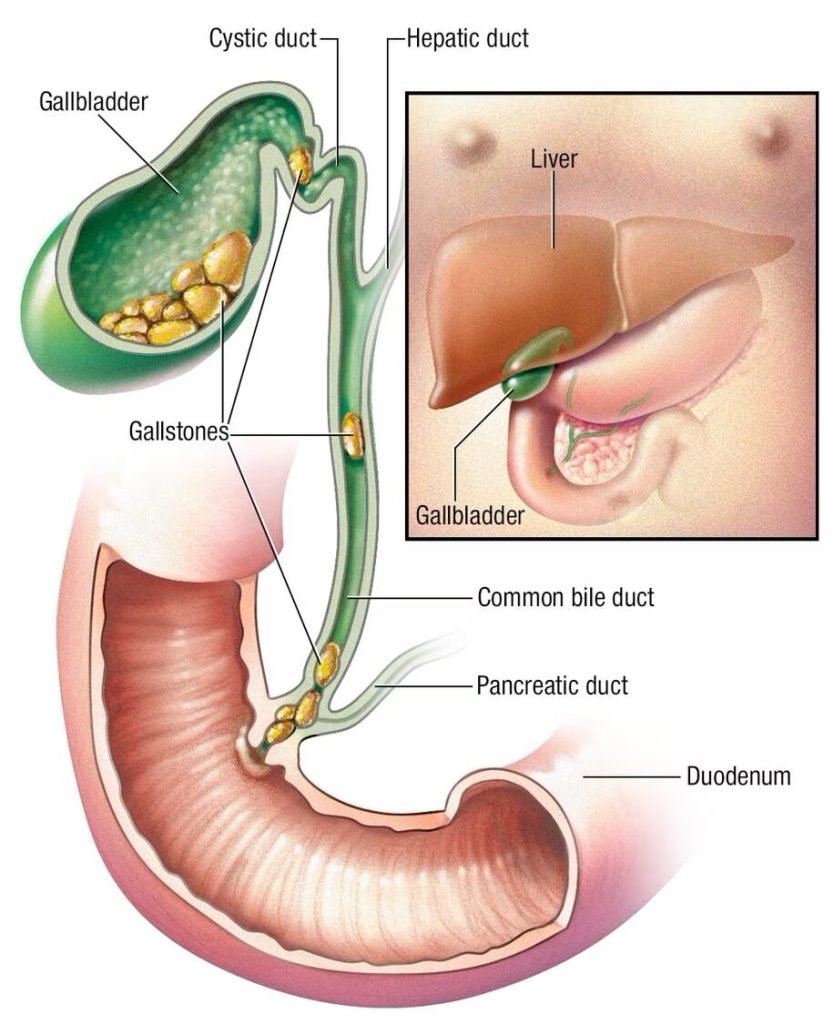
Gallstones
Gallstones, which are hardened deposits of bile, can develop in the gallbladder, a sac where bile produced by the liver is stored. During digestion, the gallbladder contracts to release bile into the small intestine.
These stones vary in size, from as tiny as a grain of sand to as large as a golf ball. While some individuals may only have one gallstone, others may develop multiple simultaneously.
Those who suffer symptoms from gallstones often necessitate surgery to remove the gallbladder. However, asymptomatic gallstones usually do not require treatment.
Symptoms
Gallstones may cause no signs or symptoms. If a gallstone lodges in a duct and causes a blockage, the resulting signs and symptoms may include:
- Abrupt and swiftly escalating discomfort in the upper right area of your abdomen.
- Sudden and swiftly escalating discomfort in the middle of your abdomen, just beneath your breastbone.
- Pain in the back situated between your shoulder blades.
- Discomfort experienced in your right shoulder.
- Feelings of nausea or episodes of vomiting.
Causes
Gallstones can form due to various factors, including:
- Excess Cholesterol: When bile contains too much cholesterol, it can lead to the formation of gallstones. This can happen if the liver produces more cholesterol than the bile can dissolve.
- Excess Bilirubin: An overproduction of bilirubin, a pigment produced during the breakdown of red blood cells, can contribute to gallstone formation. Conditions such as liver cirrhosis, biliary tract infections, and certain blood disorders can cause elevated levels of bilirubin.
- Poor Gallbladder Emptying: If the gallbladder does not empty completely or frequently enough, bile can become concentrated, increasing the likelihood of gallstone formation.
- Decreased Contractions of the Gallbladder: Reduced contractions of the gallbladder can lead to stagnant bile, which may promote the formation of gallstones.
Risk factors
Factors that may increase your risk of gallstones include:
- Female gender
- Age 40 or above
- Belonging to the Native American ethnicity
- Being of Hispanic descent, particularly Mexican origin
- Overweight or obese status
- Leading a sedentary lifestyle
- Pregnancy
- Consuming a diet high in fat
- Consuming a diet high in cholesterol
- Consuming a low-fiber diet
- Having a family history of gallstones
- Diabetes diagnosis
- Presence of specific blood disorders like sickle cell anemia or leukemia
- Rapid weight loss
- Use of estrogen-containing medications, such as oral contraceptives or hormone therapy drugs
- Liver disease
Complications
Complications of gallstones may include:
- Inflammation of the gallbladder: When a gallstone becomes trapped in the neck of the gallbladder, it can lead to inflammation of the gallbladder, known as cholecystitis. This condition can cause intense pain and fever.
- Blockage of the common bile duct: Gallstones have the potential to obstruct the ducts through which bile travels from the gallbladder or liver to the small intestine. This blockage can result in severe pain, jaundice, and infection of the bile duct.
- Blockage of the pancreatic duct: The pancreatic duct, responsible for carrying pancreatic juices that aid in digestion, can become obstructed. This duct connects to the common bile duct just before entering the duodenum.
Prevention
You can reduce your risk of gallstones if you:
- Avoid skipping meals. Maintain your regular meal schedule each day. Skipping meals or fasting can heighten the likelihood of developing gallstones.
- Lose weight gradually. If weight loss is necessary, take it slow. Rapid weight loss can elevate the risk of gallstone formation. Aim to shed 1 or 2 pounds (about 0.5 to 1 kilogram) per week.
- Incorporate more high-fiber foods into your diet. Increase your intake of fiber-rich foods such as fruits, vegetables, and whole grains.
- Sustain a healthy weight. Obesity and excess weight raise the risk of gallstones. Strive to attain a healthy weight by reducing calorie intake and boosting physical activity levels.