What are piles?
Swollen veins in the lower anus and rectum are commonly referred to as piles or hemorrhoids. This swelling can lead to localized inflammation of surrounding tissues.
Internal vs. external
Piles that develop inside the rectum are known as internal piles, often remaining unseen during external examinations. Nonetheless, in certain instances, an internal pile may enlarge and protrude outside the anus, a condition referred to as a prolapsed hemorrhoid in medical terminology.
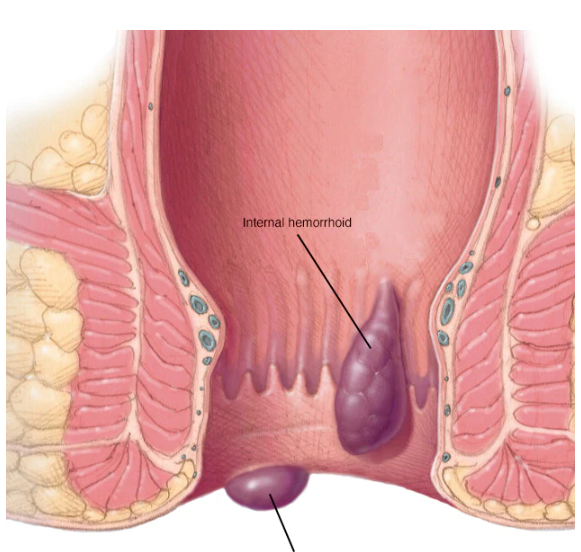
Medical professionals grade internal piles on a four-point scale.
- Grade I: The growth is asymptomatic and does not extend beyond the anus.
- Grade II: Piles may protrude from the anus but spontaneously retract.
- Grade III: Piles protrude from the anus and require manual manipulation to retract.
- Grade IV: Piles protrude permanently outside the anus and cannot be manually reinserted.
External piles manifest as small lumps along the outer rim of the anus, often causing itching and potentially escalating to pain if a blood clot obstructs blood flow. Thrombosed external piles, characterized by clotted hemorrhoids, necessitate prompt medical attention.
Symptoms
An individual with piles may experience the following symptoms:
- Painful bumps in and around the anus
- Itching and irritation near the anus
- Discomfort during and after bowel movements
- Stools tinged with blood
Piles can escalate into a more severe condition. These include:
- Profuse anal bleeding, potentially resulting in anemia
- Risk of infection
- Fecal incontinence
- Development of anal fistula
- Strangulated hemorrhoid, where anal muscles restrict blood flow to the hemorrhoid
Causes
Piles result from increased pressure in the lower rectum.
- Persistent constipation
- Frequent episodes of diarrhea
- Heavy lifting
- Exertion during bowel movements
Risk factors
Certain factors may increase a person’s risk of developing piles, including:
- Pregnancy: Hemorrhoids affect up to 50% of individuals during pregnancy, attributed to heightened pelvic pressure, increased blood volume, and a higher prevalence of constipation.
- Age: Piles are more prevalent among older adults, with approximately half of individuals over 50 experiencing them.
- Weight: Studies indicate that being overweight may elevate one’s risk of developing hemorrhoids.
- Diet: Consuming a low-fiber diet may raise the probability of developing hemorrhoids.
Treatments
In many instances, hemorrhoids can spontaneously resolve without requiring treatment. Nonetheless, certain interventions can effectively alleviate the discomfort and itching commonly associated with hemorrhoids.
Lifestyle changes
Initially, a doctor may advise implementing lifestyle adjustments to address hemorrhoids.
Hemorrhoids may result from straining during bowel movements, often associated with constipation. A dietary modification aimed at maintaining regular and soft stools can be beneficial. This may entail increasing fiber intake through fruits, vegetables, or predominantly consuming bran-based breakfast cereals.
Medications
- Pain relievers: Non-prescription pain relievers like aspirin and ibuprofen are effective in alleviating discomfort.
- Stool softeners: Stool softeners and laxatives aid in easing bowel movements, thereby reducing pain associated with hemorrhoids.
- Corticosteroids: Corticosteroid creams and ointments are beneficial for reducing inflammation, pain, and itching.
Surgical options
- Banding: Elastic bands are placed around the base of the hemorrhoid by the doctor, cutting off its blood supply. Typically, the hemorrhoid will fall off within a week.
- Sclerotherapy: A doctor injects medication into the hemorrhoid to induce shrinkage and eventual shriveling. This method is effective for grade II and III hemorrhoids and serves as an alternative to banding.
- Infrared coagulation: Surgeons employ an infrared light device to burn the hemorrhoid tissue during this procedure.
- Hemorrhoidectomy: This surgical procedure involves the complete removal of hemorrhoid tissue. It is the most effective option for eliminating hemorrhoids entirely, although there is a risk of complications, including difficulties with bowel movements.
- Hemorrhoid stapling: A surgeon uses staples to block blood flow to the hemorrhoid tissue in this procedure.